
03 / Ice cream & frozen food
Make frozen ranges easier to discover.
An illustrative chest-and-upright freezer brief for clear product navigation, campaign visibility and low-temperature display planning.
Illustrative application framework; not a documented customer installation or equipment test.
- Platform
- Chest and upright display freezer
- Placement
- Supermarket frozen zone
- Program
- Coordinated promotional island
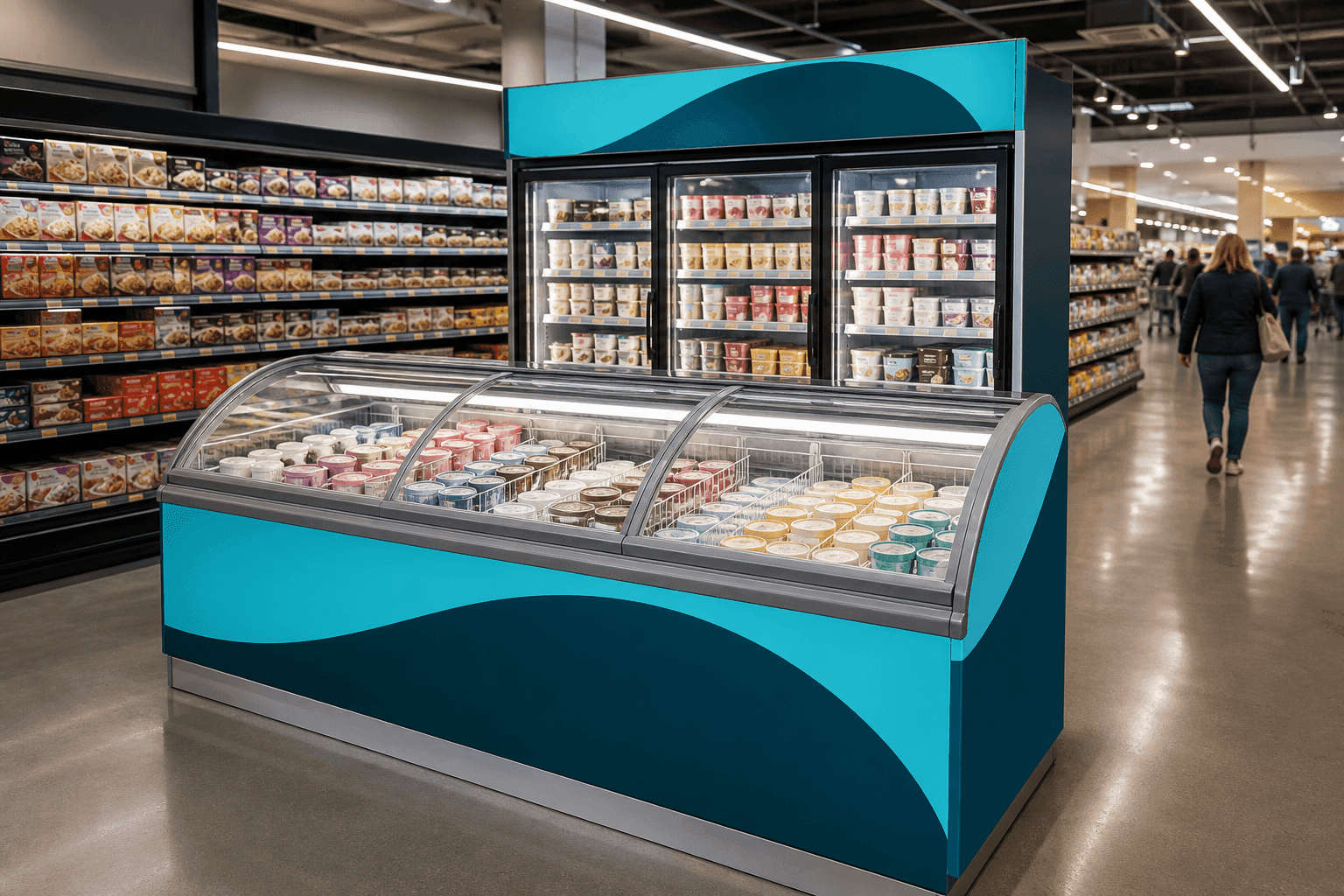 Illustrative application scene · not a customer installation
Commercial objective
What the project needs to achieve.
Combine campaign visibility with clear category navigation while protecting frozen product presentation and keeping replenishment practical for store teams.
Operating constraints
- Low-temperature operation and condensation control
- Mixed tubs, boxes and promotional ranges
- Shopper circulation around an island placement
- Durable graphics exposed to cleaning and trolley contact
Configuration direction
Translate the placement into a cabinet.
The final model and values belong on the released project specification. These four decisions define the starting direction.
Basket dividers and shelf zoning matched to actual frozen packs
One colour and graphic family scaled across two cabinet formats
Glass, frame, graphics and packing reviewed for the distribution route
Decision logic
Three choices that protect the rollout.
Build the range architecture first
Product groups, facings and replenishment method should define baskets, shelf spacing and the role of each cabinet.
Keep graphics clear of product sightlines
Large colour fields establish campaign ownership while the primary glass area remains available for product discovery.
Validate the actual market version
Low-temperature glass, defrost, voltage, refrigerant and compliance files must match the released destination configuration.
Release gates
Evidence to approve before production.
- 01Frozen pack-out and range-navigation review
- 02Temperature and defrost test to the agreed method
- 03Condensation and glass-visibility assessment
- 04Graphic durability, packing and shipment-release evidence
Program review
Measures to capture after installation.
- Range visibility and shopper navigation
- Stock capacity by category zone
- Temperature and defrost performance
- Graphic condition and transit-damage record
Build your project record
Photograph the evidence, not only the product.
A persuasive customer story shows the operating context, stocked cabinet, branding execution, technical identity and delivery condition.
Recommended photography set
- Wide frozen-zone context photograph
- Front and shopper-approach angles
- Fully stocked glass-visibility view
- Basket, shelf and controller details
- Protection, packing and store-installation photographs
Planning a similar application?
Start with the constraints.
Send the placement, product dimensions, destination market, quantity and launch target. We will identify the closest cabinet direction.
Discuss this application ↗