
Step 01
Project brief
Share product pack, destination, quantity, placement, target timing and branding requirements.
Buyer input: Pack list, site plan, destination and estimated quantity
From RFQ to rollout
A transparent project path helps brand, purchasing, engineering and logistics teams approve the same refrigerator.
Step 01
Share product pack, destination, quantity, placement, target timing and branding requirements.
Buyer input: Pack list, site plan, destination and estimated quantity
Step 02
Review the proposed cabinet platform, indicative configuration, commercial assumptions and artwork requirements.
Buyer input: Shortlist comments and the same requirements for each offer
Step 03
Align dimensions, voltage, temperature, refrigerant, components, certification path and pack-out.
Buyer input: Installation drawing, power requirements and document needs
Step 04
Apply artwork to the approved cabinet drawing and resolve colour, lighting, logo and label positions.
Buyer input: Approved brand files and colour or material references
Step 05
Build and evaluate the agreed sample or pre-production evidence package when required.
Buyer input: Agreed sample checklist and recorded evaluation
Step 06
Freeze the controlled specification, inspection criteria, packaging, milestones and shipment responsibilities.
Buyer input: Released specification, artwork and packing decisions
Step 07
Produce to the released documents and share agreed milestone evidence.
Buyer input: Responses to milestone reports and notified exceptions
Step 08
Complete the agreed inspection, accessories check, labeling, protective packing and loading plan.
Buyer input: Agreed inspection decision and shipment instructions
Step 09
Provide agreed commercial and shipping documents, spare-parts information and claim pathway.
Buyer input: Destination contact and local installation or service arrangements
Inspection to dispatch
Connect the inspection decision to the same unit, packing revision and shipment documents. Agree the handoff list before packing starts.
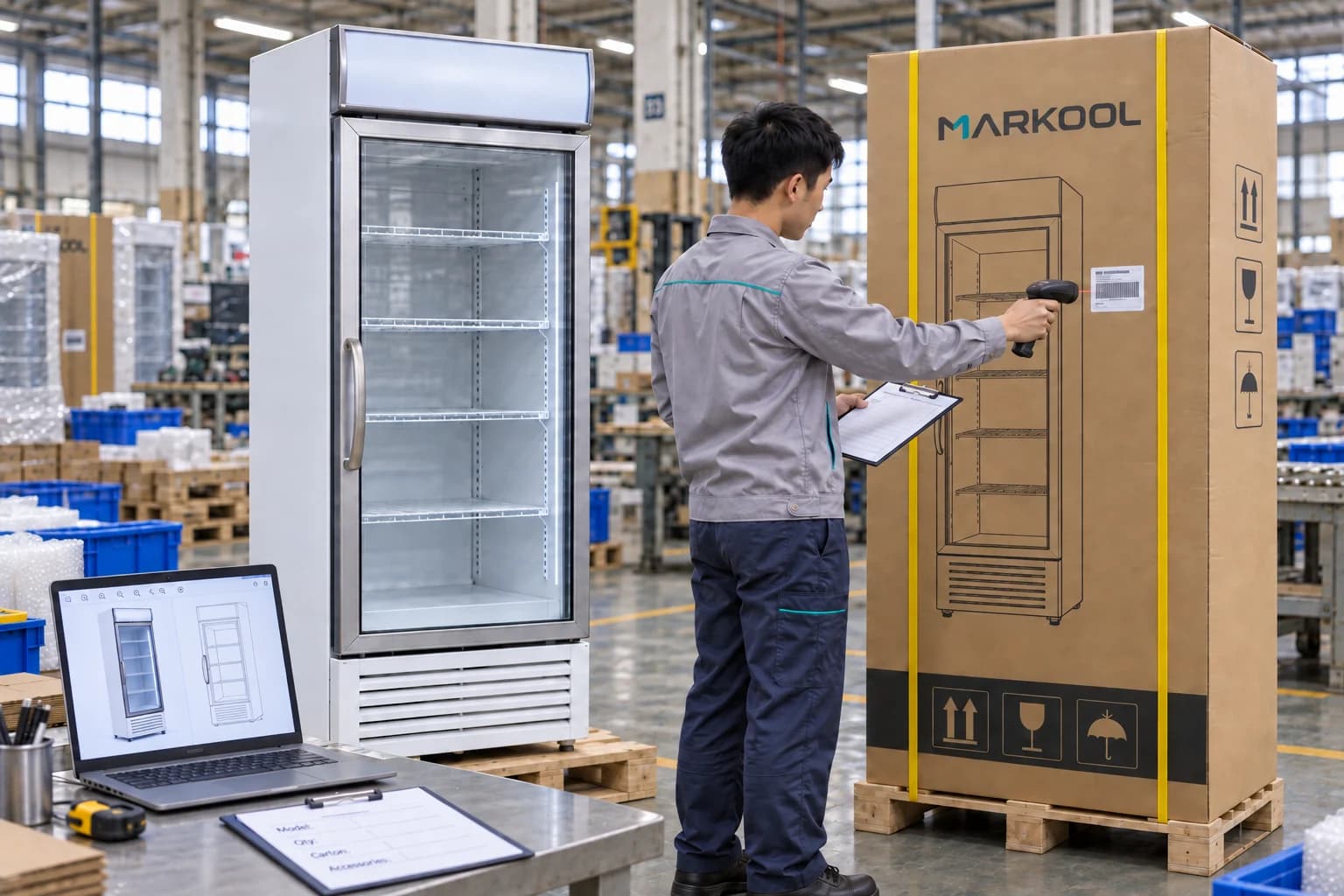
Before shipment release, compare the ordered configuration with the unit identification, carton marks and packing list. Record the batch reference, quantities, loose accessories and any approved exceptions in the handoff.
Before requesting a quote
Commercial alignment
A technically correct cabinet can still become a poor purchase when scope, milestones, freight and support are ambiguous.
From 1 unit; standard samples normally take 2–5 working days and customized samples 10–15 working days.
Eligible standard platforms can start from 20 units; deeply customized programs typically start from 50 units per model and artwork.
Standard production normally plans at 30–35 calendar days after deposit and all approvals are released.
Standard production terms are 30% deposit and 70% after agreed pre-shipment evidence and before loading.
EXW, FCA, FOB, CFR, CIF, DAP or DDP can be quoted with the exact named place and responsibility split.
Standard coverage is 12 months for the unit, 3 years for the compressor and a startup spares pack normally planned around 1%.
Ready for step one?
Even an incomplete brief is enough to identify the next technical questions.
Start an RFQ ↗