
Manufacturing team
Assign the agreed production checks, sample identification and recording of measured results. Findings should identify the affected unit or batch and the relevant drawing or specification revision.
Evidence before release
Define what must be checked, how it will be measured, which sample applies and what evidence releases the order.
Open a working example
Download a blank inspection register and follow the model, sample and shipment document trail before defining your project checks.
 Process illustration · request the model-specific test record
Test context matters
Performance evidence should identify the cabinet configuration, sensor positions, product load or simulator, ambient condition, test duration and acceptance limits. This makes a result reviewable and repeatable.
Request quality evidence ↗Checks before release
Connection points, equipment and acceptance criteria should follow the approved model and destination package. Ask for the corresponding project records when reviewing a supplier.
 Process illustration · request the electrical inspection record
Identify the model-specific electrical inspection points, test method and acceptance limits for the ordered voltage, wiring and cabinet configuration. The illustration does not establish a universal connection location.
Request the test plan ↗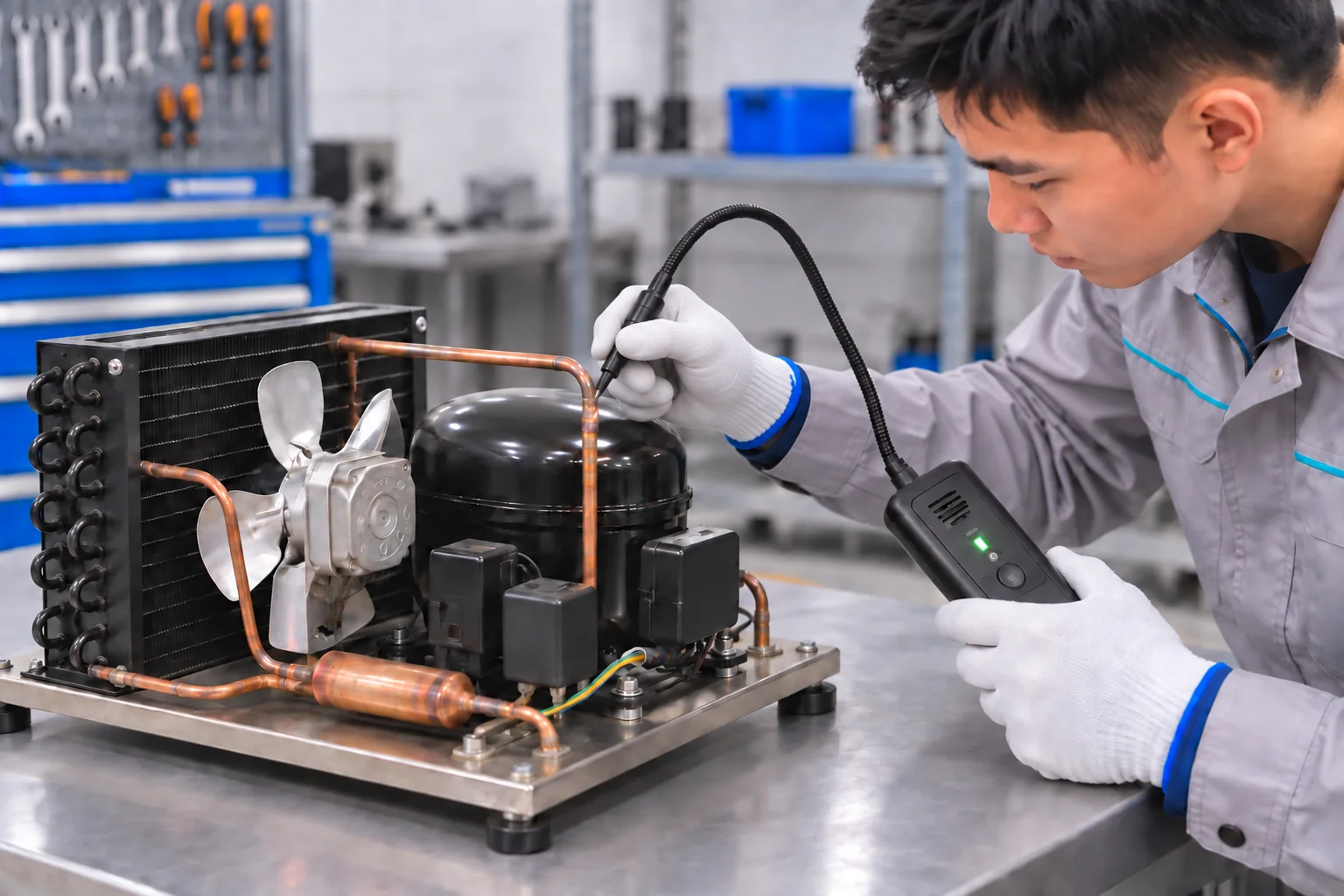 Process illustration · request the leak-check record
Identify the relevant circuit, inspection points and agreed leak-check procedure before treating a result as release evidence.
Request inspection details ↗Project quality plan
The exact inspection level and acceptance criteria are agreed against the order risk, model configuration and buyer requirements.
Model, voltage, refrigerant, artwork, components, packaging and destination requirements are aligned before production.
Expected evidenceReleased project specificationCritical components and visible materials are checked against approved requirements and supplier documentation.
Expected evidenceIncoming check recordPlan cabinet and door alignment, sealing, wiring, refrigeration assembly and shelf checks. For shelves, identify the size, wire or support diameter and the agreed strength-check method.
Expected evidenceIn-process inspection recordTemperature, cycling, controls, lighting, noise and electrical checks are defined for the selected configuration.
Expected evidenceRecorded test evidenceInclude cleaning, visible finish, door operation, shelf support, accessories, labels and pack-out in the release plan. State the sample quantity, defect criteria and disposition of exceptions.
Expected evidenceInspection and exception recordInspection records, packing photos and agreed documents are assembled before shipment release.
Expected evidenceProject release packDimensions, loading and assembly
Define measuring points, tolerances and acceptance methods for the selected shelf, supports and door assembly. Keep actual results with the drawing revision.
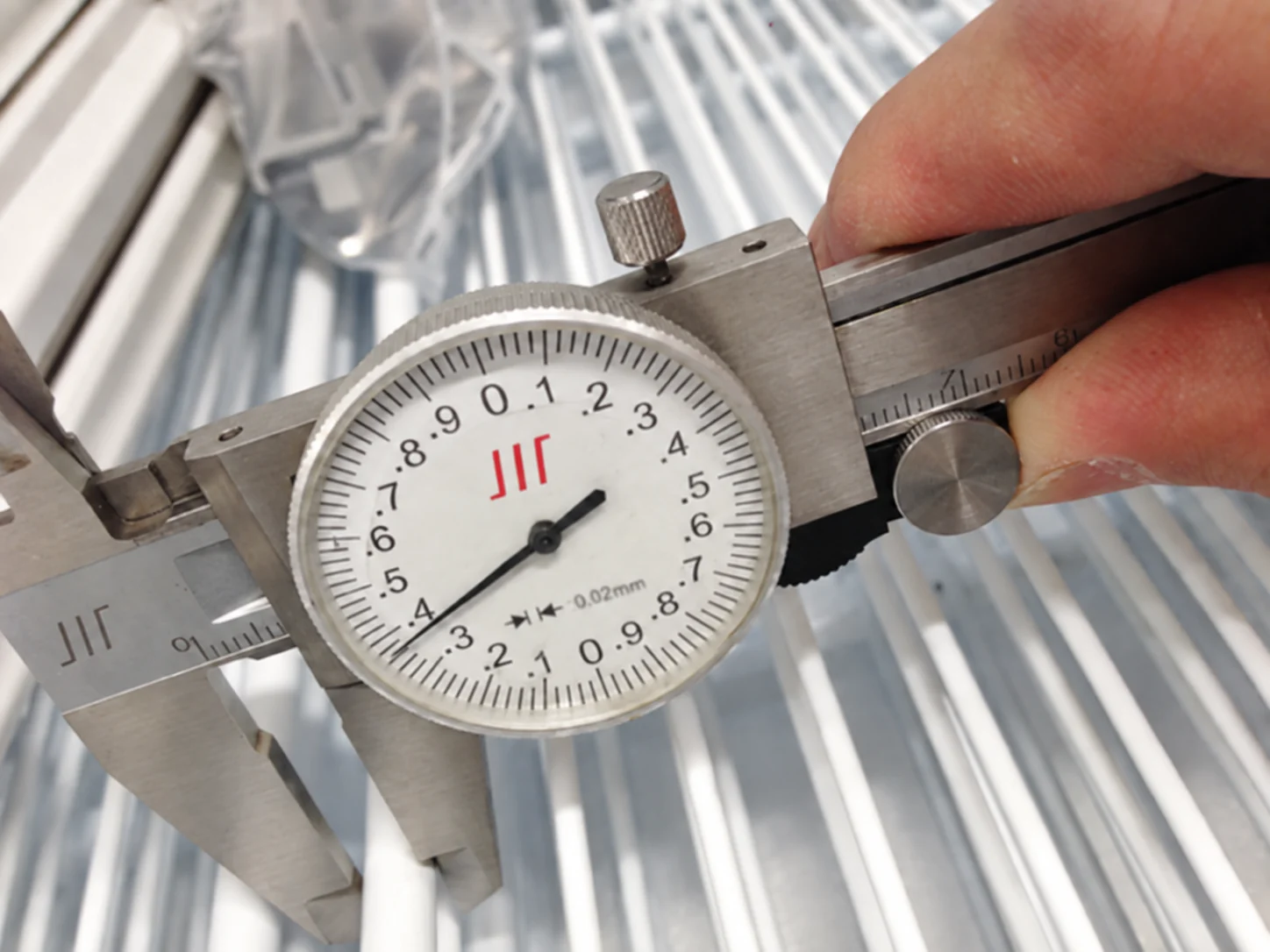
Identify the shelf member and measurement position on the drawing. Specify whether the dimension applies before or after coating, select a suitable instrument and record the actual reading against the agreed tolerance.
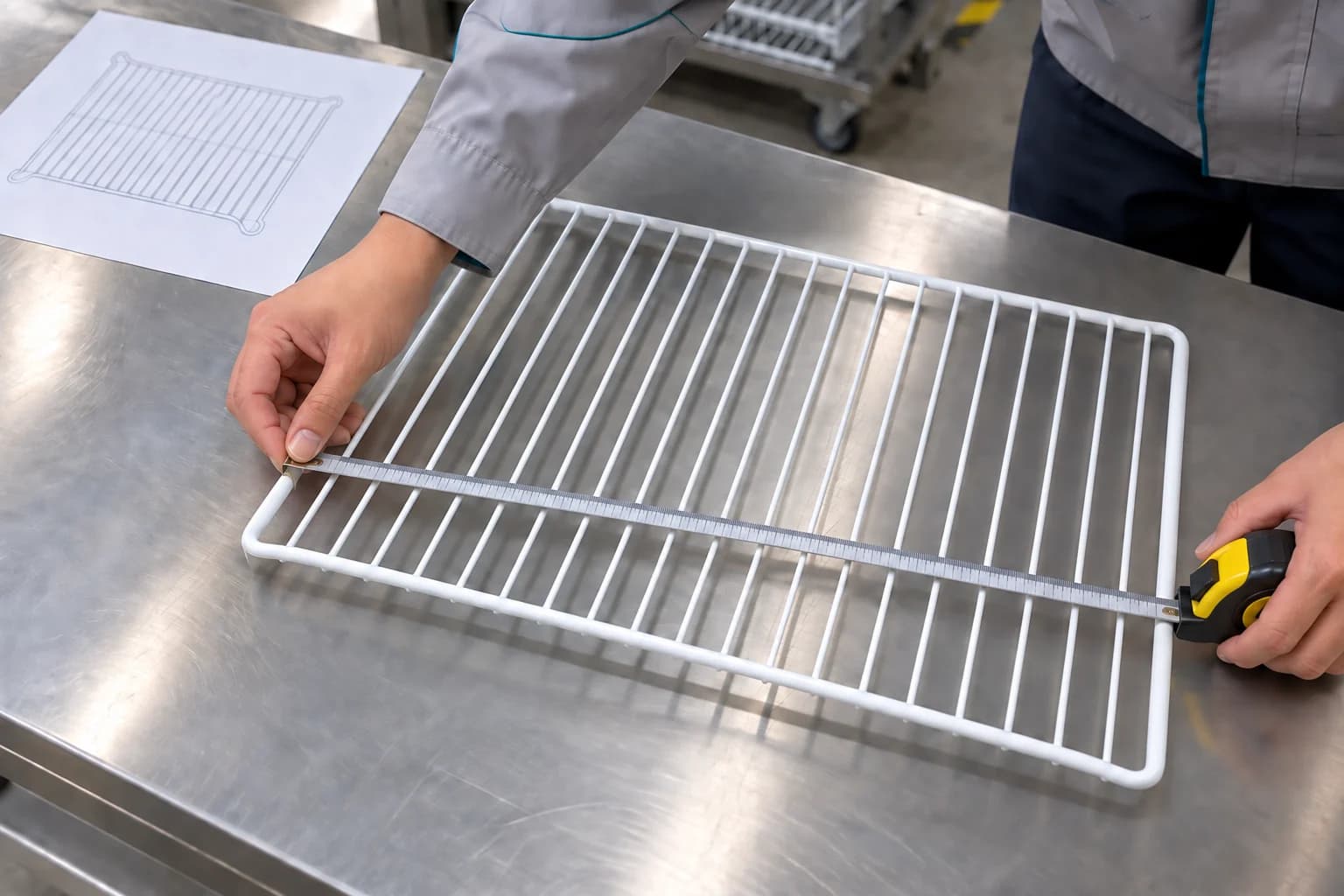
Identify the shelf revision and measure its overall width and depth from the agreed outside edges. Record the measuring points, coating condition and permitted tolerances, then check the shelf against the intended supports.

Use the agreed package assortment and loading pattern to review shelf seating, support engagement and access. Define any strength test separately, including the load, distribution, duration, measurement method and acceptance limits; keep the actual results with the shelf and support revision.

Use the agreed door assembly and drawing revision to check frame alignment, door clearances and the closed position on the first article. Record any adjustment and repeat the affected check before releasing that configuration for production.

Compare door position, frame alignment and the sealing interface with the released assembly requirements. Record the inspection points and any adjustment; use a separate agreed method when seal performance or door endurance must be verified.
What buyers can request
Define acceptance before production
Share your critical-to-quality features, inspection standard and destination requirements with the project brief.
Build a quality plan ↗