
Application requirements

Start with how
the product sells.

The required product condition, pack format, access pattern and retail environment define the cabinet brief.

Placement and service

Plan the work around the cooler.

Use the retail, café and event concepts to identify access, assortment and replenishment requirements before choosing a cabinet.
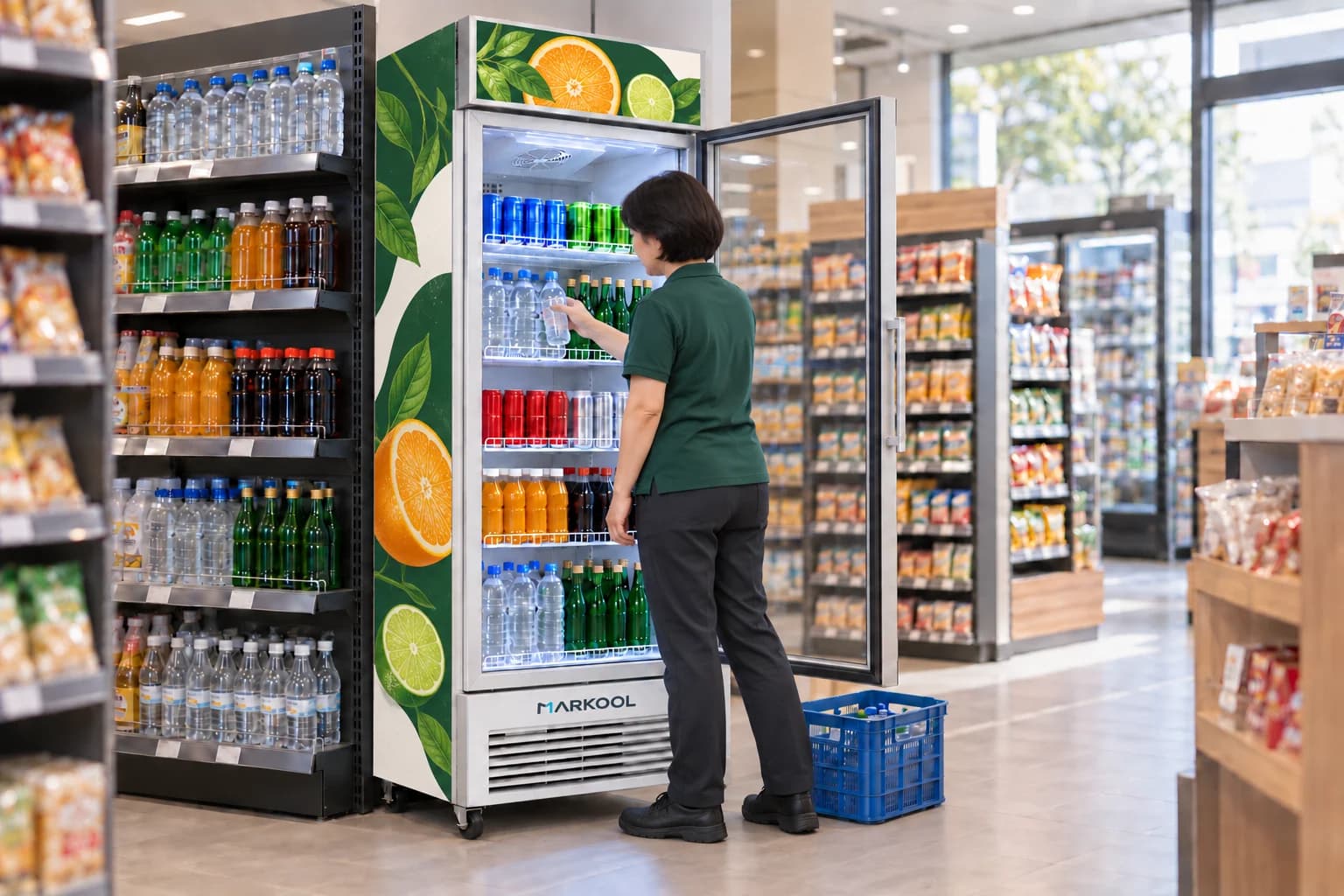
Convenience-store employee selecting a drink from a citrus-branded upright cooler
Application concept

Keep convenience-store drinks easy to reach

Choose the cabinet around shopper access and the restocking route. Review the door swing, shelf facings and bottle heights with the actual assortment, then confirm the footprint and ventilation requirements for the store position.
Include in your brief
  • Store position and clear customer aisle
  • Bottle and can dimensions
  • Door access, facings and replenishment
Compare retail drinks formats →
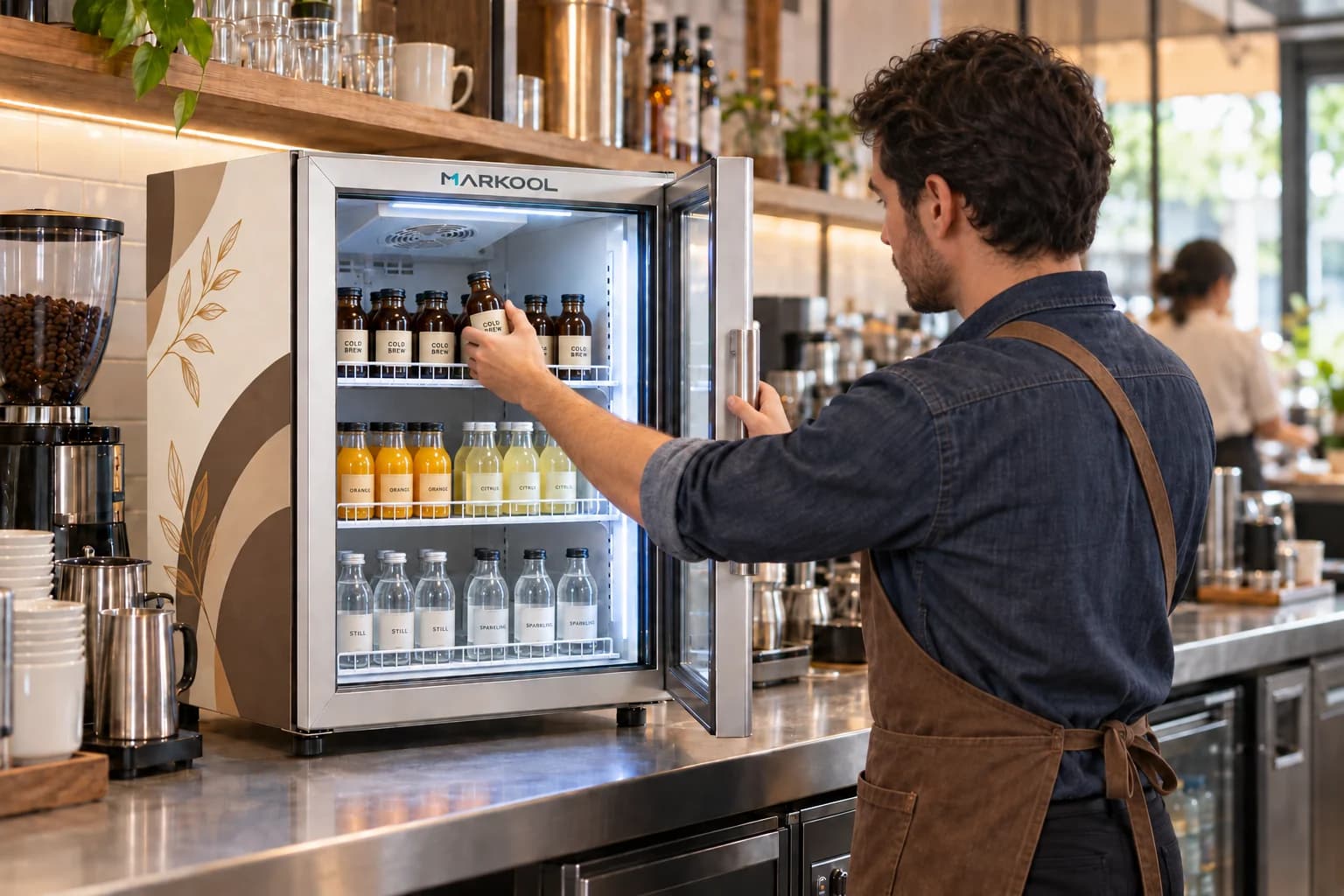
Café server taking a cold-brew bottle from a countertop cooler while holding the door handle
Application concept

Organise the café counter around the next order

Plan cold brew, juice and bottled water around the service menu. Check reach from the preparation area, door opening and replenishment while keeping the counter workflow clear. Confirm the proposed cabinet and its installation requirements before fixing the layout.
Include in your brief
  • Service menu and beverage pack sizes
  • Available counter footprint and door access
  • Restocking route and peak service pattern
Compare countertop and floor placement →
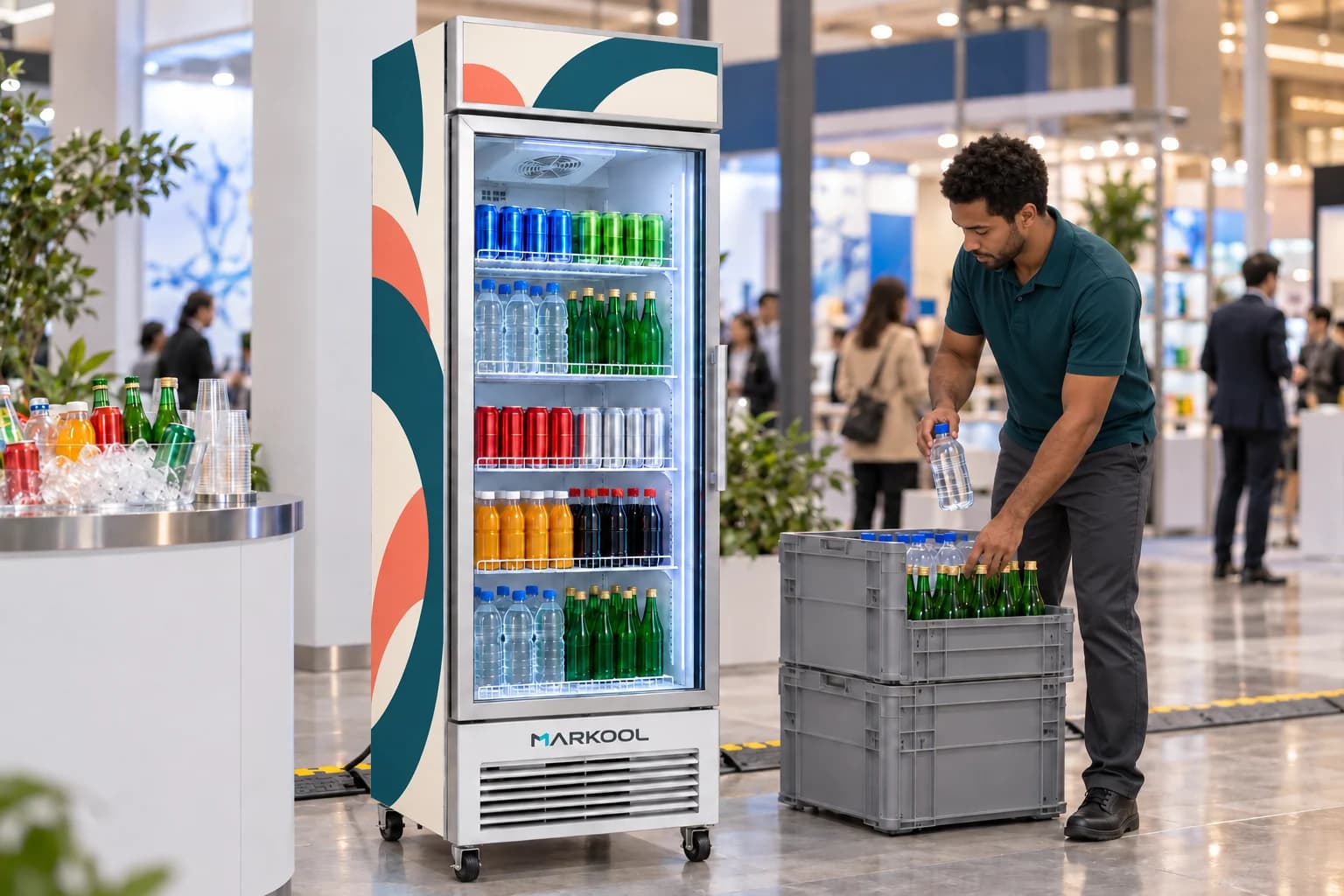
Event attendant replenishing drinks beside an upright MARKOOL cooler with geometric campaign graphics
Application concept

Plan event cooling around service and replenishment

Define the drinks assortment, service point and replenishment route before choosing an event cooler. Confirm the final cabinet footprint, door access, ventilation requirements and the venue-approved power route together.

Include in your brief
  • Package sizes and drinks assortment
  • Service position and replenishment access
  • Venue power provision and cable route
Prepare a campaign cooler brief →

From application to model

Start with a shortlist you can compare.

Each option links to its own specifications and buying brief. Compare the same packs, placement and destination before choosing.

Drinks at the checkout or counter

Choose the footprint around the counter, then compare your actual cans and bottles.

Self-service drinks in a retail aisle

Compare a narrow checkout position, one-door access and a wider two-door assortment.

Drinks served behind the bar

Use the staff aisle and bottle mix to compare door movement. Check each model's installation drawing before planning an enclosure.

A branded counter or promotional position

Choose where the brand will be seen before approving the artwork surface.

Replacement shelves and merchandising parts

Identify the component first, then match the host cabinet, supports and fixings. These parts perform different jobs.

Planning frozen products or another format?

Start with the required holding condition, package sizes and access pattern to define the equipment brief.

Explore freezer formats →

Build the application brief

Different industries.
Different decisions.

Use these questions to shortlist formats and identify the information needed for a useful recommendation.

Beverage & energy

Compare countertop, slim upright and multi-door formats by purchase point and assortment. A sampling counter and a supermarket drinks aisle need different shelf and replenishment plans.

Operating boundary

Use the actual cans, bottles and required product condition. A reference can count or a bright graphic does not establish the pack-out or performance of another cabinet.

Bring to the RFQ

Send the assortment, facing targets, counter or floor plan, ambient conditions and rollout quantity.

Compare the relevant options →

Beer & spirits

Compare hinged and sliding back-bar access using the staff aisle and serving route. If two-sided service is required, request a separate pass-through configuration sheet.

Operating boundary

Specify which products are to be chilled and their required service condition. Confirm ventilation and enclosure permission for the exact cabinet; a low height does not establish built-in suitability.

Bring to the RFQ

Send the full bar opening, bottle sizes, access sides, cleaning conditions and destination power.

Compare the relevant options →

Ice cream & frozen

Compare top-access chest and front-access upright display by package shape, customer reach and replenishment. Basket and shelf arrangements must serve the intended frozen assortment.

Operating boundary

Obtain the product owner's holding requirement and compare model-specific temperature, defrost, drainage and condensation provisions. Do not use one universal temperature across frozen products.

Bring to the RFQ

Send pack sizes, required holding condition, ambient conditions, opening frequency and intended basket or shelf layout.

Compare the relevant options →

Food & grab-and-go

Separate shopper-facing presentation from kitchen storage. Compare open-front or glass-door display for retail, and discuss solid-door storage when staff access is the main task.

Operating boundary

Use the food producer's applicable holding requirements and the site's operating conditions. An open-front cabinet needs its own load and airflow review rather than a closed-door model's result.

Bring to the RFQ

Send the food and package list, required condition, turnover pattern, shelf allocation and store airflow context.

Compare the relevant options →

Brand activations

Choose a compact counter, floor display or another cabinet format around the campaign's viewing direction and serving method. Specify adjacent fixtures as separate supply items.

Operating boundary

Describe power, handling, duration and environmental exposure. Outdoor use, unusual heat or enclosed placement require explicit model-specific review; a concept scene does not establish suitability.

Bring to the RFQ

Send approved brand files, site plan, campaign duration, sample purpose, quantity by location and launch target.

Compare the relevant options →

Application mapping

One brief.
Four practical questions.

These inputs narrow the product and configuration before artwork is finalised.

01

Product

What is stored, in which packs and under which required holding conditions?

02

Placement

Who reaches the product, how is it replenished and what installation space is available?

03

Market

Which destination, power supply, operating environment and document requirements apply?

04

Rollout

Which sample, first-order and location quantities support the launch target?

Share the retail challenge

Define the next cabinet decision.

A placement photo, floor plan and product list help us identify candidate formats and the information still needed.

Start the application brief ↗