
What R290 means
R290 is refrigerant-grade propane. It is used in many self-contained commercial refrigeration systems because of its thermodynamic performance and low global-warming potential. Its flammability means the sealed system, electrical layout, labeling, production controls and servicing instructions must be designed for that refrigerant.
Performance depends on the complete system
Refrigerant choice does not determine efficiency by itself. Compressor selection, heat exchangers, insulation, fan control, door design and operating conditions all matter. Compare tested energy and temperature data for the complete cabinet.
Market requirements are model-specific
Applicable safety standards, charge limits, markings and certification routes vary by destination and product construction. Confirm the exact model, refrigerant charge, voltage and intended use with the supplier and certification body before ordering.
Shipping and service need planning
Transport documents, labels and carrier acceptance should be reviewed before booking. Distributors and service partners also need clear procedures, suitable tools and replacement-parts information for hydrocarbon systems.
Questions to include in an RFQ
Ask for refrigerant type and charge, compressor model, declared climate class, test conditions, energy data, relevant certificate number, wiring diagram, service manual and spare-parts list. The supplier should identify which documents apply to the quoted configuration.
Compare the complete refrigerant configuration
Ask the supplier to identify the existing refrigerant version and the exact version offered. A refrigerant name is not a compressor selection, charge specification or safety file. Use the same load and operating conditions when comparing complete-cabinet energy or temperature data.
| Item | Request | Open question to record |
|---|---|---|
| Refrigerant | Type and charge for the exact version | Is the quote and rating-plate identity consistent? |
| Compressor | Model and system configuration | Which operating requirement was used for selection? |
| Electrical | Power package, wiring and relevant parts | Does the evidence cover these components? |
| Evidence | Applicable report or listing identity | Which model, conditions and revision are covered? |
| Service | Applicable manual and parts identification | Who provides qualified servicing at destination? |
Select the compressor by operating duty, not cabinet litres
For an R290 proposal, request the compressor identity and the conditions used for selection. The supplier should match refrigerant, cooling duty, evaporating and condensing conditions, electrical supply and the manufacturer's operating limits. A horsepower figure, a cabinet volume or an ambient climate label alone does not describe that match.
Ask for complete-cabinet evidence under your intended loading and site conditions. Compressor efficiency is one input; doors, fans, controls, defrost and any glass heating also belong in the configuration being compared. A part substitution should trigger a review of the affected performance and document scope.
Fixed-speed or variable-speed: compare the complete system
Variable-speed systems can adjust compressor output as the refrigeration load changes. Copeland describes this using a compressor paired with its drive. That pairing is the relevant distinction: an inverter label alone is not a cabinet energy result or permission to add a drive to an arbitrary compressor.
Ask for the price difference, temperature results, energy data and service requirements for two complete configurations under the same test conditions. Keep any projected savings separate from measured evidence; operating hours, load and site conditions affect the purchasing calculation.
| Buying question | Fixed-speed proposal | Variable-speed proposal |
|---|---|---|
| System identity | Compressor and starting/control components | Compressor, matched drive and control package |
| Operation | Ask for cycling and recovery results under the agreed load | Ask for modulation and recovery results under the same load |
| Energy and noise | Request cabinet-level results and test conditions | Request comparable results, including operating mode |
| Service | Identify replacement components and local support | Include drive/controller identification and service capability |
Technical references
These sources explain the topic; they are not certification or test evidence for a MARKOOL model.
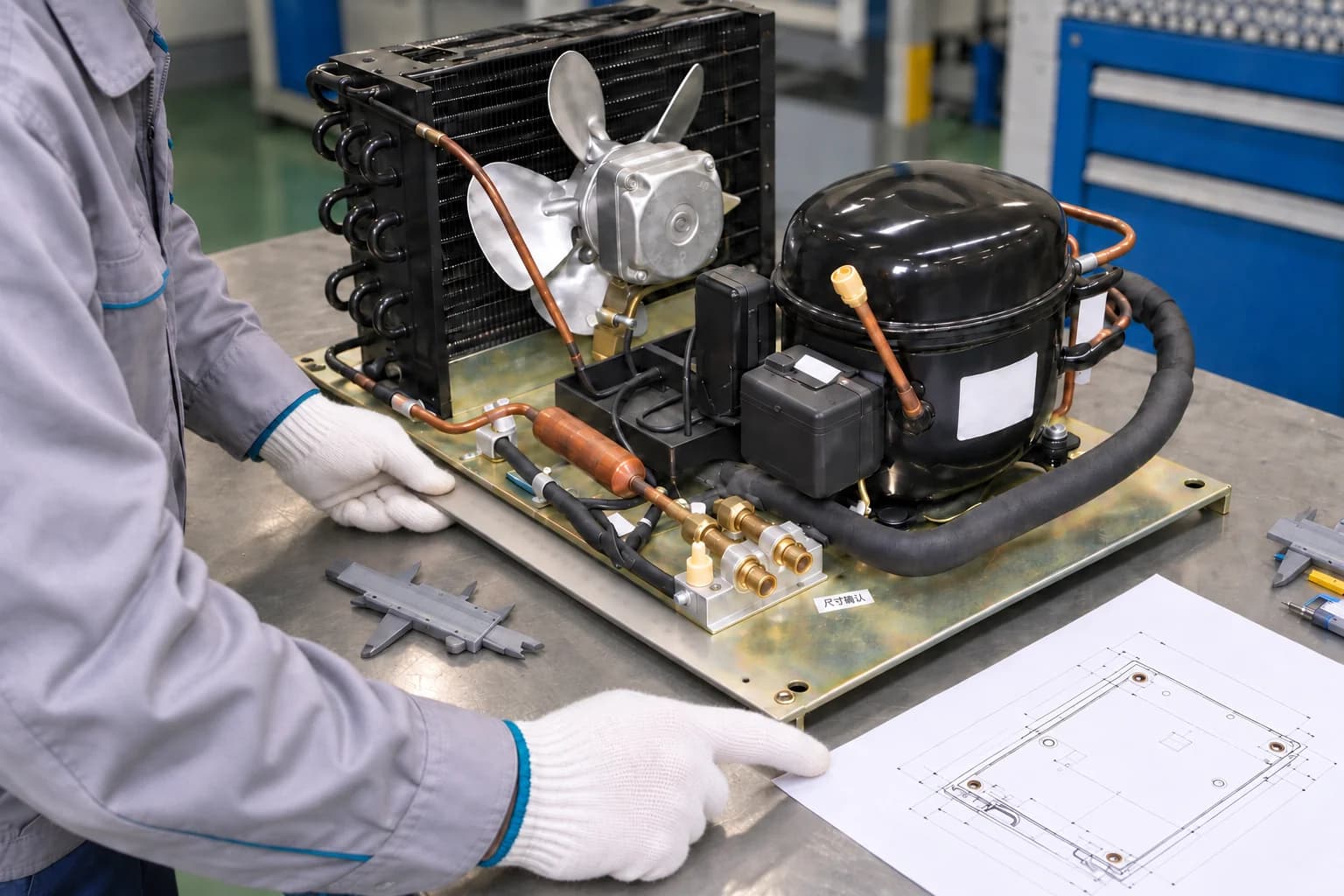
Match the assembly to its installation drawing
Compare the proposed refrigeration assembly with the mounting drawing. Identify the fixing points, connection locations and space needed for installation and service. Confirm refrigerant, electrical details and applicable documentation from the specification for that exact assembly.
- Assembly identity and drawing revision
- Mounting points, connections and service access
- Refrigerant and electrical specification
Apply the checklist
Review the R290 version as a complete cabinet.
Share the model, destination, voltage and use. Request the refrigerant charge, relevant safety evidence and service information for the exact version being quoted.
Request R290 model details ↗