

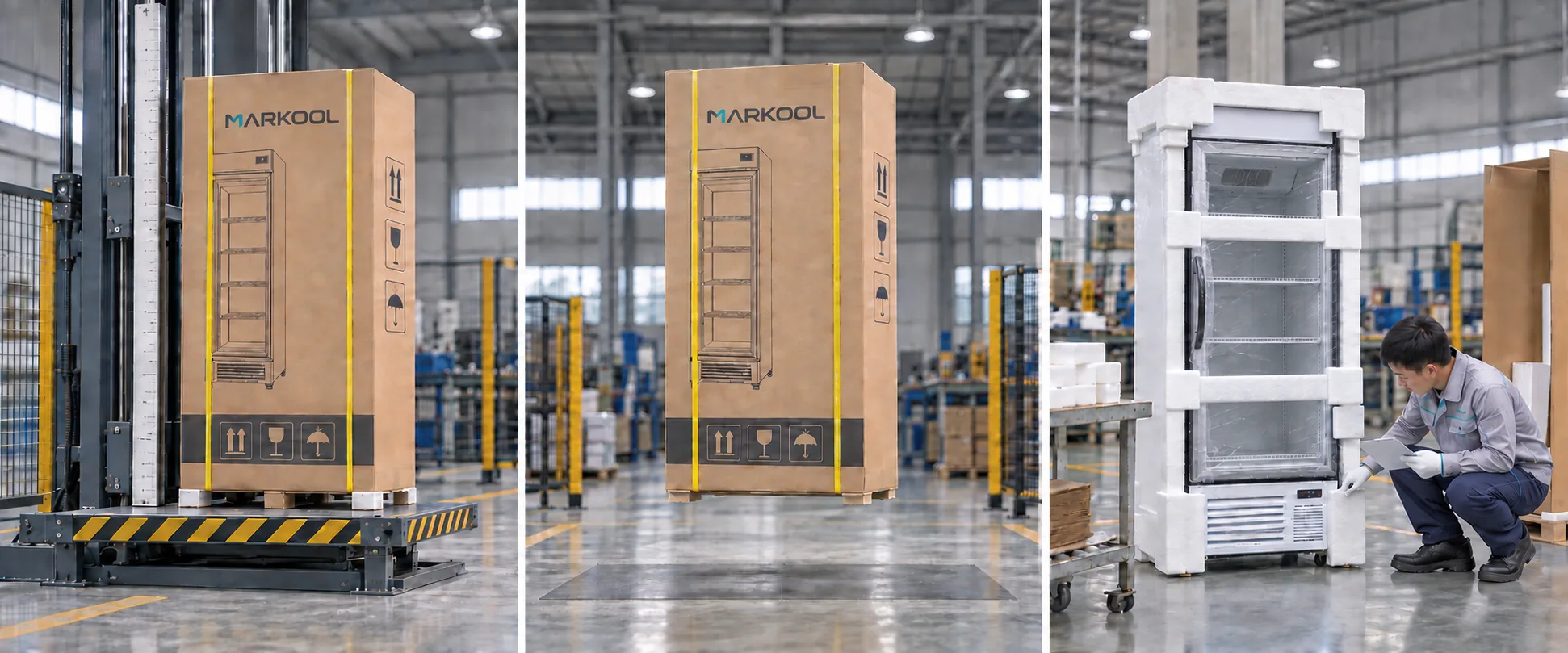


Packed size controls the calculation
Carton, foam, pallet, corner protection and clearance can materially change the number of units that fit. Ask for packed dimensions and gross weight for the exact configuration, then confirm whether the quantity is calculated or based on a completed loading record.
Protection and density must be balanced
Higher loading density is not automatically better if it reduces protection, creates unstable stacks or complicates unloading. Align the packing method with cabinet weight, glass area, route, handling points and buyer requirements.
Mixed models require a loading plan
A mixed container can help a launch cover several placements, but different heights and footprints create unused space. A model-by-model loading plan should show quantities, orientation and any pallets or separators.
Compare landed decisions
Use the container plan alongside unit price, freight, duties, warehousing and expected damage risk. A cabinet with a slightly smaller packed footprint may improve total program economics even when its unit price is not the lowest.
Separate a calculation from a loading record
An estimated unit count based on carton dimensions is useful for budgeting, but it does not show how the actual cabinets, glass protection, pallets and accessories will be restrained in the container. Ask whether the quoted count is an estimate or has been checked against a drawing or completed shipment of the same packed configuration.
A reviewable loading plan names the cabinet and packing revision, container type, unit orientation, count by model, pallet or separator method, gross weights and the location of loose parts. Record any handling limits and unloading assumptions before using the count in a landed-cost comparison.
Bring the load plan into the RFQ
Send each intended model and quantity, packed dimensions and weight if known, destination, whether pallets are required, and any glass or finish protection concerns. If the order mixes cabinet sizes or branded finishes, ask for a model-by-model count and the packaging version used for the estimate.
Confirm the final packing method with the approved sample and supplier before shipment. A historical CKD or finished-cabinet example does not establish the load count for a new order.
Review the protective pack before calculating the count
For the selected cabinet, review the proposed enclosed EPS top protection, corner or upright guards, EPE at vulnerable glass areas, door restraint, PE film and carton. Identify the accessory bag and any desiccant specified by the pack plan. These are items to confirm for the model and route, not materials assumed present on every order.
Keep the cabinet unpowered during packing and handling. Record the approved protection layout and packed dimensions before calculating a container mix. An illustration of packing or a drop test is not a completed report for the quoted order.
| Handoff | Check | Evidence to request |
|---|---|---|
| Protection | Glass, door, finish and loose accessories | Model-specific packing specification |
| Identification | Model, quantity, marks and package revision | Product, accessory and carton photographs |
| Validation | Agreed method and acceptance criteria | Actual test report and post-test inspection |
| Loading | Orientation, mixed sizes, pallets and access | Drawing and count by model |
| Restraint and unloading | Separation, fixing and site handling | Loading record and agreed unloading assumptions |
Apply the checklist
Request a pack-out and loading plan.
Send the intended models, quantities, destination and packing or pallet requirements. Ask which cabinet and packaging revisions support the proposed container count.
Request loading documents ↗